Tracing the Roots of Host Response Diagnostics
The concept of host response diagnostics dates back to the early 20th century when physicians first observed that infections triggered characteristic immune responses. In the 1930s, researchers discovered C-Reactive Protein (CRP), marking a significant milestone in using biomarkers for clinical diagnosis. This pivotal discovery laid the foundation for today’s host-response-based diagnostic methods (Tillett and Francis, 1930).
Single Biomarkers
That Changed Healthcare
Throughout the 20th century, clinicians relied heavily on individual inflammatory biomarkers, notably CRP and later Procalcitonin (PCT), to guide infection diagnosis and treatment. The introduction of PCT in the 1990s was particularly transformative, significantly enhancing clinicians’ ability to distinguish bacterial infections from other causes of inflammation (Assicot et al., 1993).
Main studies of PCT – Schuetz et al, JAMA 2009, Christ-Crain et al. Lancet 2004, Wesley et al. Clin Infect Dis. 2017,
1930s
CRP Discovered
Lorem Ipsum is simply dummy text of the printing and typesetting industry.
1993
PCT Identified
Lorem Ipsum is simply dummy text of the printing and typesetting industry.
2004
PCT in Clinical Use
Lorem Ipsum is simply dummy text of the printing and typesetting industry.
Combining Biomarkers:
The Future of Precision
Diagnostics
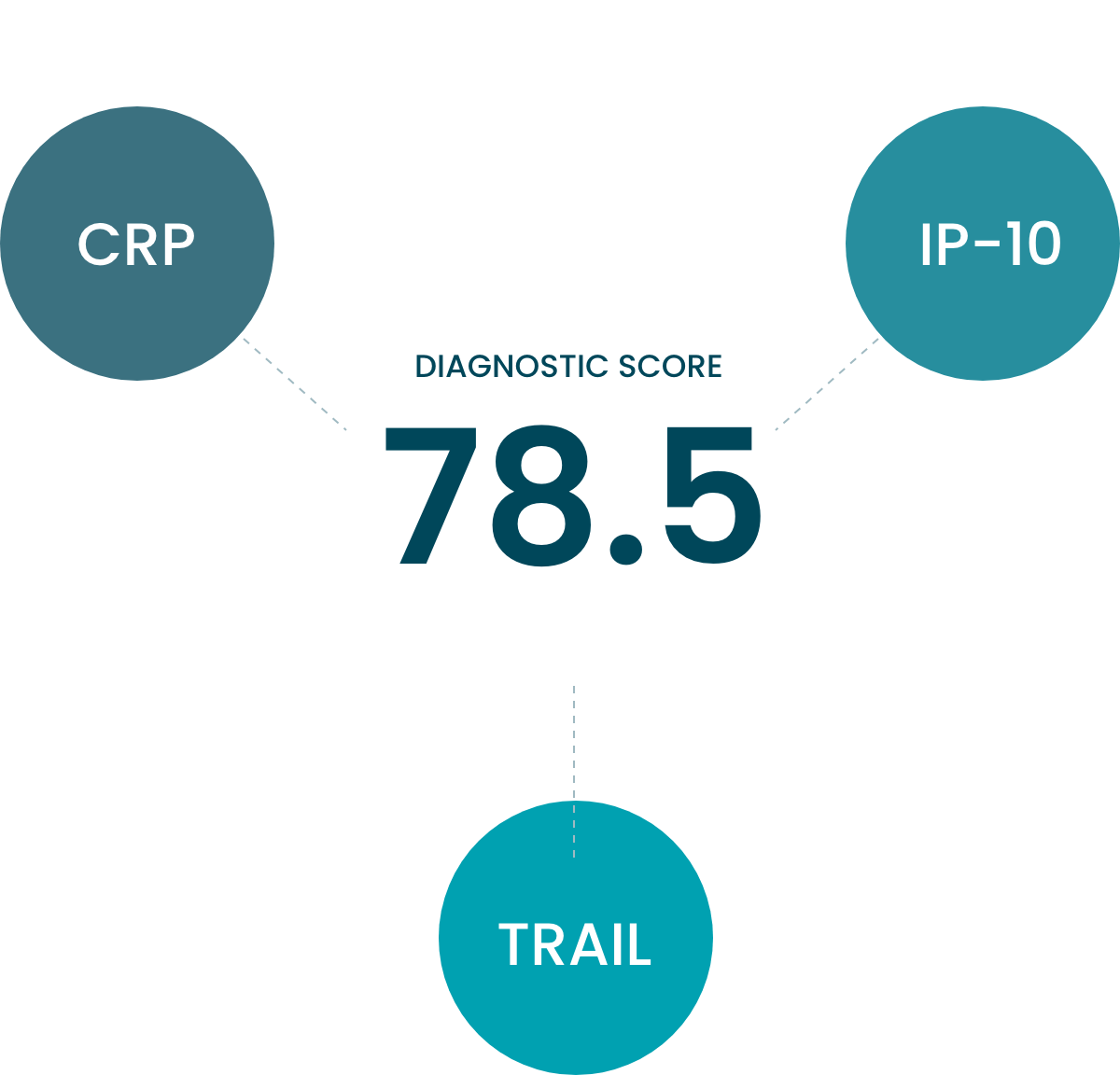
The early 21st century saw a paradigm shift towards integrating multiple biomarkers into numeric diagnostic scores, greatly enhancing diagnostic accuracy and clinical decision-making. Landmark studies introduced innovative combinations, such as MeMed BV™, which integrates CRP, IP-10, and TRAIL into a powerful single diagnostic score. This approach enables clinicians to rapidly and reliably differentiate bacterial from viral infections, optimizing patient care and supporting antibiotic stewardship (Oved et al., 2015).